The Rolling Ball Tack Test is a well-established method for assessing the tack of pressure-sensitive adhesives (PSAs), particularly for low-tack adhesives such as those used in medical tapes. Understanding this testing method is essential for professionals in the medical and packaging industries, ensuring that medical tapes and other adhesive products meet the required performance standards.
In this article, we will discuss the Rolling Ball Tack Test Method, how it works, the significance of ASTM D3121, and why it is crucial in ensuring the quality of medical tapes. Additionally, we’ll highlight the importance of using a kamuoliukų lipnumo testeris for precise, repeatable results.
What is the Rolling Ball Tack Test?
The Rolling Ball Tack Test (as outlined in ASTM D3121) is a simple, yet effective method for measuring the tack of pressure-sensitive adhesives. The test involves releasing a steel ball from the top of a slope onto an adhesive-coated surface. The ball rolls across the adhesive until it comes to a stop, and the distance it travels is used to determine the tack of the adhesive.
The tack, in this case, is the initial “grab” or adhesion the adhesive exhibits. The adhesive not only needs to stick to the ball but must also overcome two major resistive forces:
- Adhesion (Grab): This is the force that causes the adhesive to stick to the ball.
- Plowing Effect: This is the energy required to move the adhesive out of the ball’s path.
The Significance of the Rolling Ball Tack Test in Medical Tapes
For medical tapes, tack is an essential property, ensuring that the tape sticks well upon initial contact but can be easily removed without causing skin irritation. The Rolling Ball Tack Test offers a fast, reproducible, and cost-effective way to measure this property.
Why is Tack Important in Medical Tapes?
Tack is crucial in medical tapes for the following reasons:
- Initial Adhesion: A medical tape needs to adhere firmly to the skin or surgical site immediately after application.
- Repositionability: While tack is important for adhesion, it should not be so strong that it is difficult to reposition the tape, especially in medical applications.
- Skin Safety: Excessive tack can result in skin damage or irritation, while inadequate tack may lead to tapes peeling off prematurely.
By using the Rolling Ball Tack Test, manufacturers can ensure that their medical tapes meet the ideal balance of tackiness—strong enough to stay in place but gentle enough for safe removal.
ASTM D3121: The Standard for Rolling Ball Tack Testing
ASTM D3121 is the official standard method for Rolling Ball Tack Testing of pressure-sensitive adhesives. This standard provides guidelines on performing the test, ensuring consistent and reliable results across different manufacturers and test setups.
Some of the key aspects covered by ASTM D3121 include:
- Test Conditions: The temperature, humidity, and adhesive film thickness must be controlled during testing to ensure reliable results.
- Equipment: The test requires a kamuoliukų lipnumo testeris that accurately releases and measures the ball’s movement.
- Test Interpretation: Results are reported as the distance the ball travels before stopping, with clear thresholds indicating various levels of tack.
By adhering to ASTM D3121, manufacturers can guarantee that their medical tapes and other adhesive products meet the necessary performance criteria for quality control and regulatory compliance.
Using the Ball Tack Tester for Consistent Results
A kamuoliukų lipnumo testeris is the essential tool used for the Rolling Ball Tack Test. This instrument releases a steel ball onto an adhesive-coated surface at a controlled speed and angle. The tester then measures the distance the ball travels across the adhesive.
For manufacturers of medical tapes, using a kamuoliukų lipnumo testeris offers the following benefits:
- Repeatability: The tester ensures that the test is performed under consistent conditions, minimizing human error and providing reliable data.
- Ease of Use: With minimal setup and simple operation, the ball tack tester is ideal for quality control personnel to quickly assess tack performance.
- Cost-Effective: The test requires little investment in equipment and can be easily incorporated into routine quality checks during production.
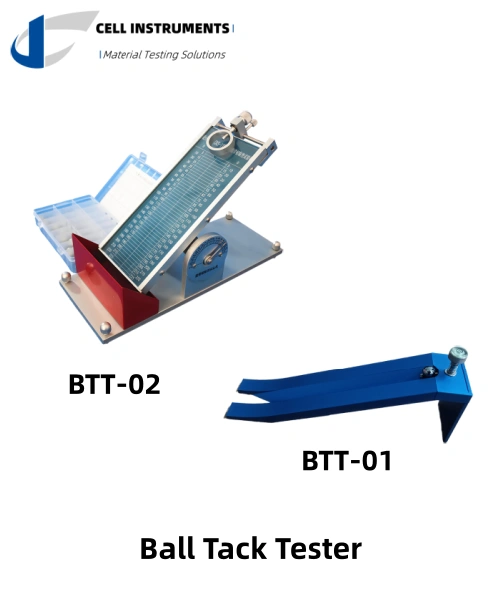
The Cell Instruments Ritininis kamuoliukų testeris is an ideal solution for performing this test in line with ASTM D3121. It offers precise measurement capabilities, ease of use, and reproducibility, making it an excellent choice for manufacturers of medical tapes looking to ensure consistent product quality.
Conclusion
The Rolling Ball Tack Test Method, as defined in ASTM D3121, is an invaluable tool for measuring the tack of pressure-sensitive adhesives, particularly in medical tapes. By using a kamuoliukų lipnumo testeris, manufacturers can ensure that their products exhibit the optimal level of adhesion needed for medical applications—adhesive enough to stick but gentle enough for safe, comfortable removal.
With the Cell Instruments BTT Rolling Ball Tack Tester, testing becomes both efficient and precise, helping ensure that medical tapes meet the high standards of quality control required for medical and pharmaceutical applications. For manufacturers, adopting this test method means producing safer, more reliable products that meet the needs of both healthcare providers and patients.
 LT
LT  EN
EN  AR
AR  BG
BG  CS
CS  DA
DA  DE
DE  EL
EL  ES
ES  ET
ET  FI
FI  FR
FR  HU
HU  ID
ID  IT
IT  JA
JA  KO
KO  LV
LV  NB
NB  NL
NL  PL
PL  PT
PT  RO
RO  RU
RU  SK
SK  SL
SL  SV
SV  TR
TR  UK
UK